
Tuesday, November 20, 2012
Thanksgiving Baby!
Thanksgiving is a very important time of year. It is a good time to get together with family and eat a good meal. However, it can become a landfill in your house if you don't conserve paper and water. Paper plates are very easy to use and clean, but they are not very eco-friendly if you don't recycle them. Wash the plates with a little water and then put them in the recycling. SO SIMPLE! So keep your Thanksgiving out of the landfill and have a great 3 1/2 day weekend Crestview! Happy Thanksgiving!


Tuesday, November 13, 2012
How 'bout Hahamongna?
We are lucky enough to have an amazing outdoor science lab just a block away from Crestview! Hahamongna Watershed Park is an incredible and inviting setting, rich in biodiversity and opportunities for learning. Here's an abbreviated background on the environment and history of this tremendous local resource...
Hahamongna Habitat
Hahamongna is a very special place with rich environmental values, the most environmentally sensitive location in our region. Located at the mouth of the Arroyo Seco as the stream descends from the mountains into the urban plain, Hahamongna is the flood basin for the Arroyo Seco and a source of water for much or our region. Periodically fierce storms from the mountains roar into this area. That flow is augmented by runoff from the communities of Altadena and La Canada Flintridge as the river moves toward the Los Angeles River. The Arroyo Seco stream flows year round in the mountains. When it reaches the Hahamongna area much of it is tapped for municipal water supply and most of the rest goes underground during the Spring and Summer, although there is an almost constant flow in the lower Arroyo.
Most people refer to Hahamongna Watershed Park as the 250 acres in the flood basin at the foot of the San Gabriel Mountains near Jet Propulsion Laboratory, but it also extends into the mountains above JPL to include a total of 1400 acres. The area is bounded on the south by Devil's Gate Dam, LA County's first flood control dam built in 1920. On the east side of the Hahamongna basin are spreading basins or percolation ponds that have captured surface flow in the Arroyo Seco since 1914 and diverted it for municipal use.
Riparian Habitat
Much of Hahamongna consists of a riparian zone, a region of direct interaction between terrestrial and stream systems. This zone directly influences the Arroyo Seco stream channel and ecosystem.
The riparian wetlands, which occur on the edge of the steam, feature woody vegetation such as white alder, cottonwood, and willow. Riparian habitats are characterized by lush vegetation and a rich diversity of species. Elderberries, wild rose, and blackberries grow beneath willow, oak, laurel, sycamore and cottonwood trees. Songbirds, woodpeckers, hawks, owls, frogs, snakes, skunks, raccoon, coyote and deer thrive here. The healthy riparian corridor through Hahamongna once was critical habitat for salmon, steelhead trout and other anadromous fish. Today trout still swim in the mountains just north of Hahamongna.
Freshwater Marsh Habitat
In the southern part of the Hahamongna basin, flow from Flint Canyon and the western portion of the Arroyo Seco watershed has established a lovely pond or freshwater marsh. Freshwater marsh habitat grows in and near ponds, low lying areas that accumulate runoff and slow-moving segments of streams. This pond is vegetated mostly with herbaceous plants, predominantly cattails, sedges, and rushes. Freshwater marshes have mineral soils that are less fertile than those of salt marshes but exhibit a greater variety of plant species.
Alluvial Scrub Habitat
Hahamongna is a canyon and flood basin consisting of the silt, sand, gravel, rocks and similar material deposited by tha Arroyo Seco stream as it descends from the mountains. These alluvial canyons are particularly rare in Southern California. Most have been severely degraded by development and other human activity.
The Hahamongna basin is a particularly good expample of alluvial fan sage scrub habitat, a Mediterranean shrubland type that occurs in washes and on gently sloping alluvial fans. Alluvial scrub is made up predominantly of drought-deciduous soft-leaved shrubs, but with significant cover of larger perennial species generallly found in chaparral. Alluvial scrub typically is composed of scalebroom, white sage, redberry, California buckwheat, Spanish bayonet, California croton, cholla, tarragon, yerba santa, mule fat, and mountain-mahogany.
Riversidean Alluvial Fan Sage Scrub, such as that found at Hahamongna, is the most threatened of Coastal Sage Scrub associations with less than 15,000-acres remaining worldwide ... making it more endangered than ancient redwood forests of the Pacific Northwest and tropical rainforests.
Chapparel
The slopes of Hahamongna are crowded with chaparral, a shrubland or heathland plant community found primarily in California and in the northern portion of the Baja California peninsula, Mexico. It is shaped by a Mediterranean climate (mild, wet winters and hot dry summers) and wildfire. Similar plant communities are found in the four other Mediterranean climate regions around the world, including the Mediterranean Basin (where it is known as maquis), central Chile (where it is called matorral), South African Cape Region (known there as fynbos), and in Western and Southern Australia.
A typical chaparral plant community consists of densely-growing evergreen scrub oaks and other drought-resistant shrubs. It often grows so densely that it is all but impenetrable to large animals and humans. This, and its generally arid condition, makes it notoriously prone to wildfires. Although many chaparral plant species require some fire cue (heat, smoke, or charred wood) for germination, chaparral plants are not "adapted" to fire per se. Rather, these species are adapted to particular fire regimes involving season, frequency, intensity and severity of the burn.
Oak Woodland
California oak woodland is a plant community found throughout the California chaparral and woodlands ecoregion of California and northwestern Baja California. Oak woodland is widespread at lower elevations in coastal California, interior valleys of the Coast Ranges, and in a ring around the California Central Valley grasslands. The dominant trees are oaks, interspersed with other broadleaf and coniferous trees, with an understory of grasses, herbs, geophytes, and shrubs. Oak savannas occur where the oaks are more widely spaced.
The Oak woodlands of Southern California and coastal Northern California are dominated by Coast Live Oak (Quercus agrifolia), but also include Valley Oak (Q. lobata), California Black Oak (Q. kelloggii), Canyon live oak (Q. chrysolepis), and other California oaks. Hahamongna also includes Englemann oaks, a distinctive cousin of the Blue Oak that was called the Pasadena Oak by the early settlers of our region.
Thursday, November 8, 2012
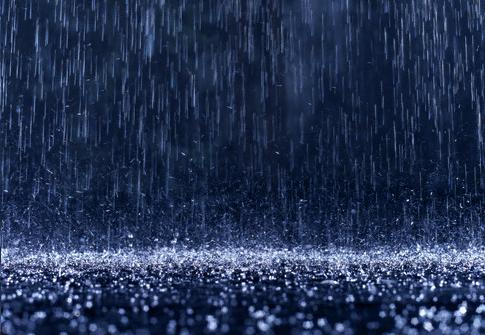
Rain: A good thing or a Bad Thing?
Hey Eco-Clubbers Rain is a great thing. It gives us water for our plants, it cleans the air, and it gives us some nice cool air. However, when people forget to stop their sprinklers when it rains. This can waste a huge amount of water. An average sprinkler system runs for about 15 minutes. The average sprinkler uses 4 gallons of water per minute. Unless you live on a golf course, you will use about 60 gallons of water per 15 minutes. So remember to shut off your water when it rains and when it does rain, turn on you sprinklers in the early morning or in the late evening. This will make sure that the water doesn't evaporate. This will save your family money and keep your grass nice and green.

Friday, November 2, 2012
3 Day Weekend!
Hey Eco Clubbers. It is a 3 day weekend this week but that doesn't mean you slack off on the healthfulness of the Earth. If you see a paper or plastic bag flying around in the street, pick it up and place it in the appropriate trash or recycling bin. Also, turn off any lights you aren't using in your bedroom, living room, dinning room, etc. Well, I hope you get the point now. HAVE AN AWESOME WEEKEND!
Subscribe to:
Comments (Atom)